
Three Mobile
The BIO Agency / Design Director
July 2017 - October 2018
Leading an omni-channel service transformation at scale
As Design Director at BIO, I led the design function for Three’s omni-channel service redesign - a large-scale transformation spanning web, app and customer service platforms.
Three’s ambition was to rethink the full customer lifecycle experience, from exploration and purchase through to support and retention. The programme required coordinated delivery across multiple disciplines and platforms, under an aggressive timeline.
A new way of managing large design teams
With 15 designers working in parallel, traditional file-sharing workflows wouldn’t scale.
We introduced structured version control using Abstract, allowing the team to work collaboratively without overwriting assets or duplicating patterns.
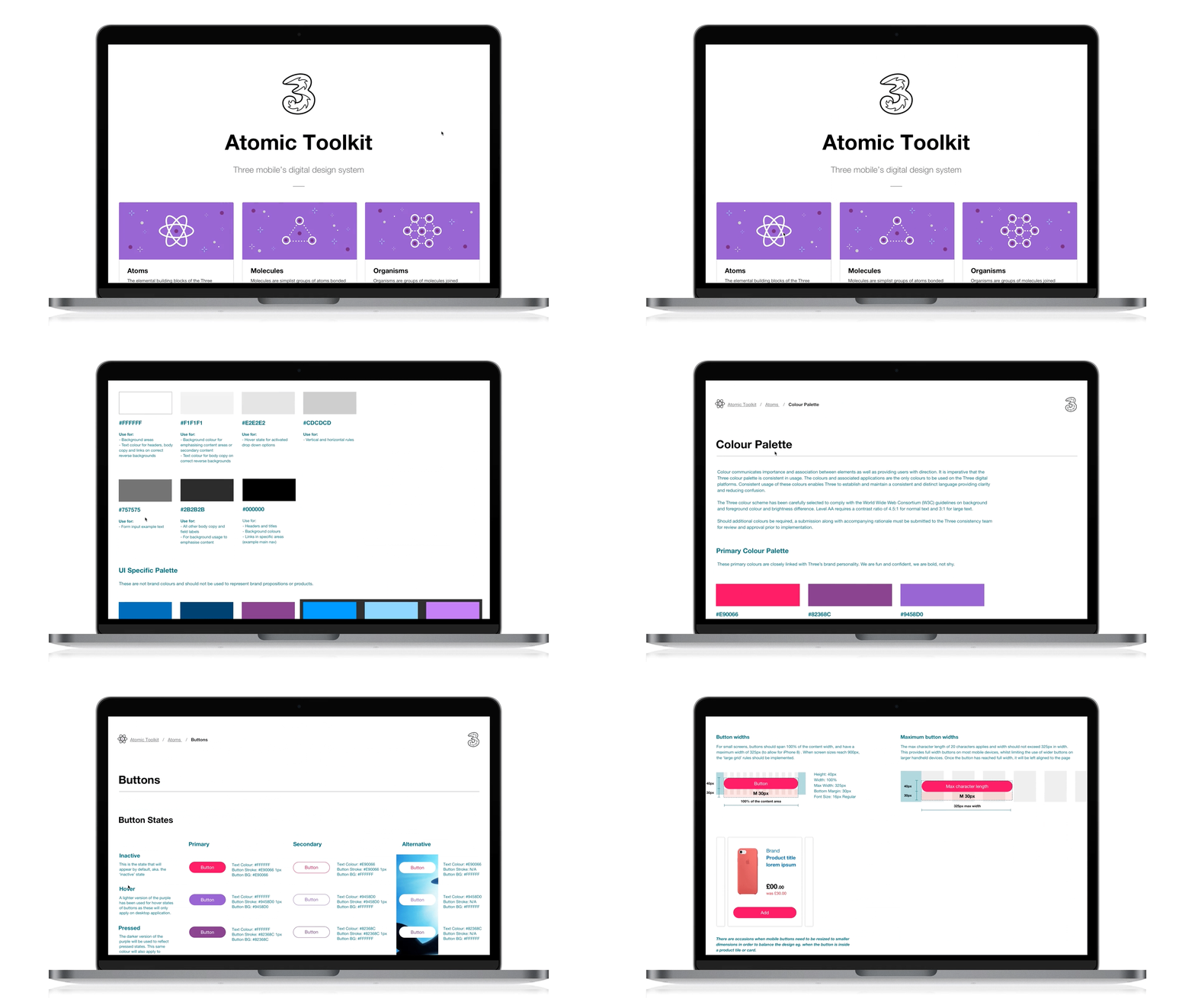
Building on Atomic Design principles previously established at Savills, we formalised a component-led toolkit for Three’s digital platforms - laying the foundation for their first structured design system.
A new team structure
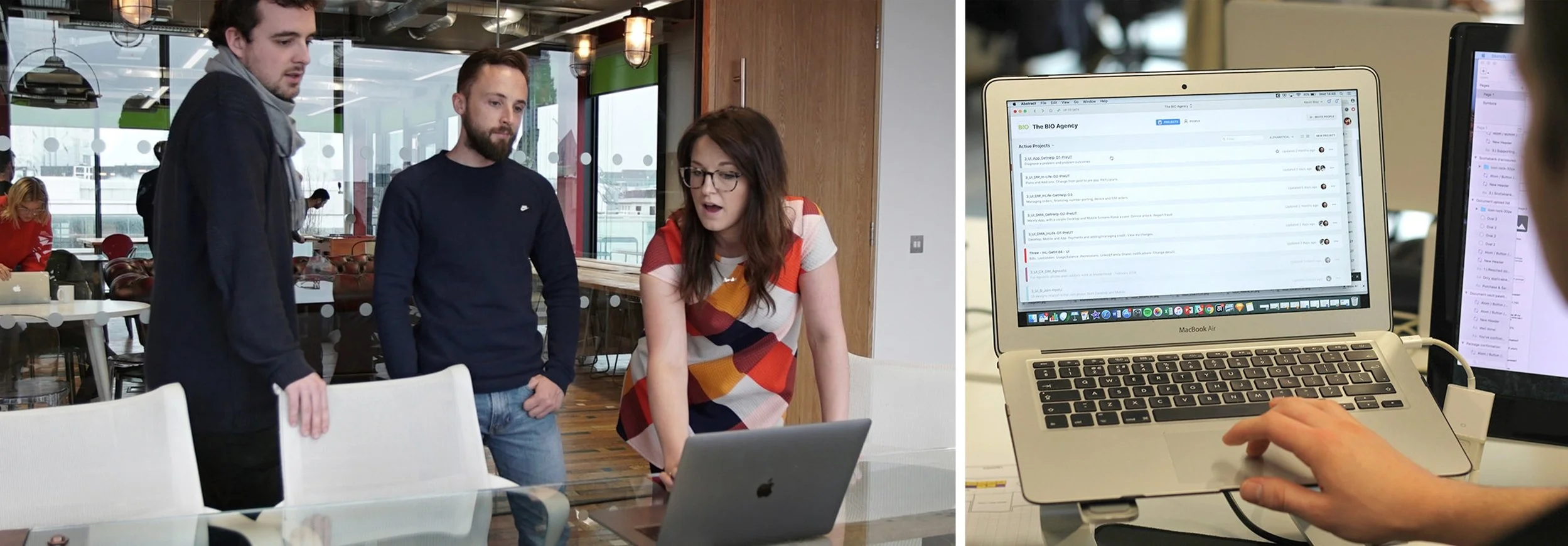
The project was initially organised around individual strengths. Under the pace of delivery, this quickly became limiting.
I restructured the team around customer lifecycle stages:
Explore - Browsing and product discovery
Join - Purchase and sign-up
Get Help / Leave - Support and troubleshooting
Hygiene - Global components such as navigation, banners and shared modules
Each stream included a balanced mix of app and responsive web designers to avoid platform silos.
Alongside these teams, we established a Consistency group made up of discipline leads. As Design Director, I sat within this group - reviewing new additions to the Atomic Toolkit, resolving cross-stream conflicts and maintaining alignment with the broader experience vision.
This model allowed us to move quickly while maintaining coherence.
Motion as a design tool
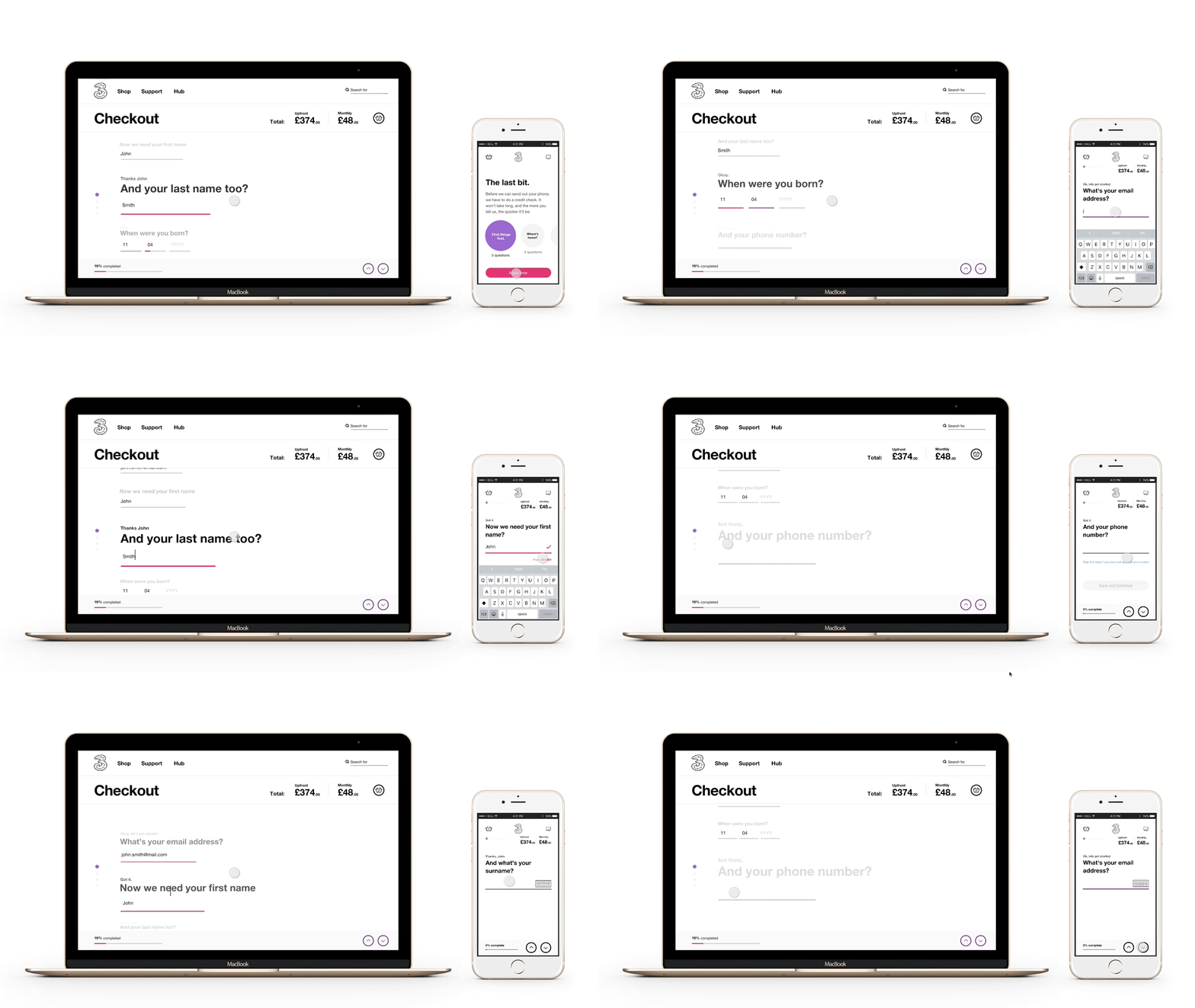
Interaction prototypes played a key role in communicating direction to stakeholders.
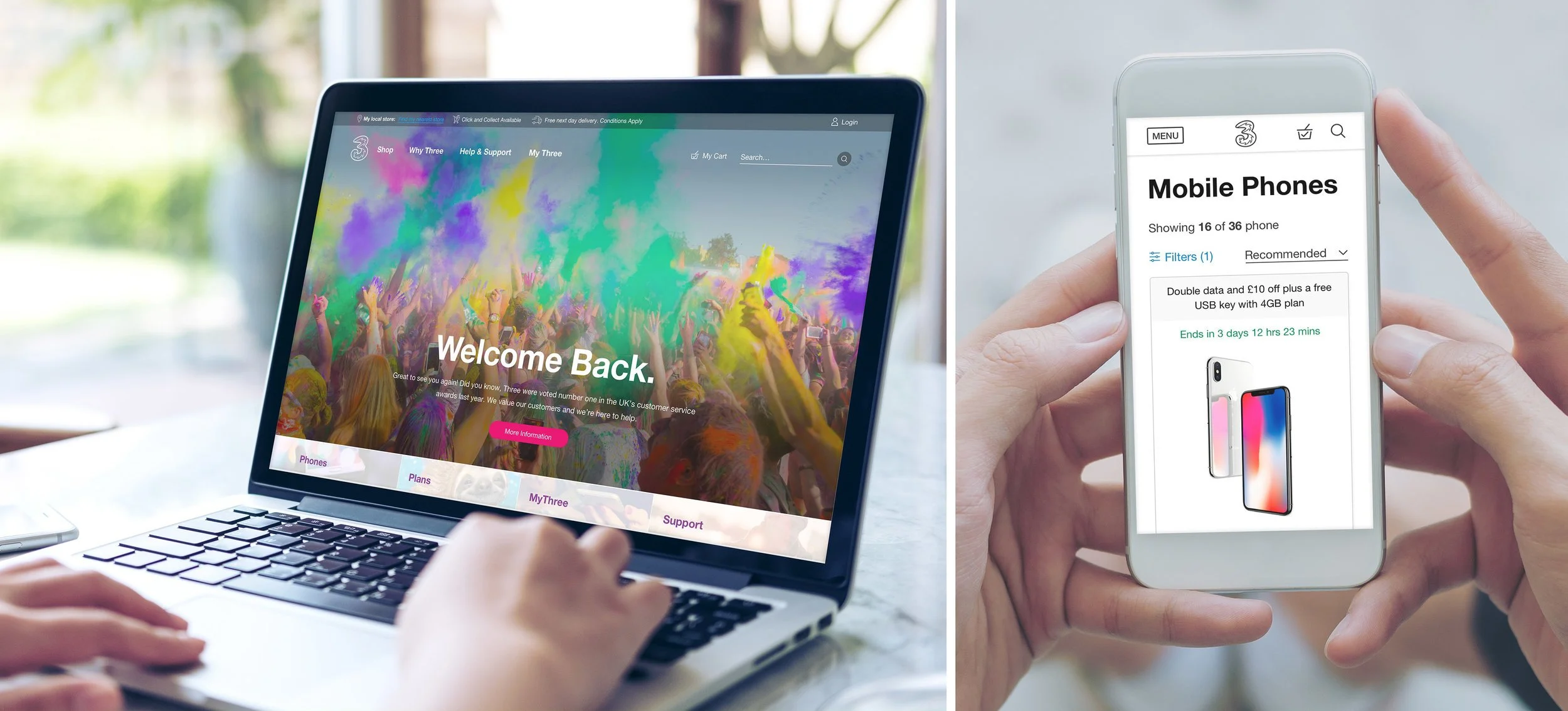
Beyond static components - grids, typography, buttons - we defined motion principles to ensure consistent interaction behaviour across web, app and service platforms.
Motion was treated as part of the system, not decoration.
A future-proof design system
The programme resulted in Three’s first formalised, component-driven design system.
It established a shared foundation across channels, improved collaboration between design and engineering, and created a scalable structure for future digital work.