
Tate
Contract: Mentally Friendly
August - December 2016
Redesigning Discovery Across a Cultural Archive
In 2016, I joined digital product agency Mentally Friendly to lead UX and design improvements for Tate’s website.
Tate is a family of four galleries - Tate Modern, Tate Britain, Tate Liverpool and Tate St Ives - with a digital archive spanning more than 77,000 artworks and 4,000 artists. The scale and cultural importance of the collection meant a full rebuild was not viable. Instead, the focus was on targeted, high-impact UX improvements implemented in collaboration with Tate’s internal development team.
Improving core browsing journeys
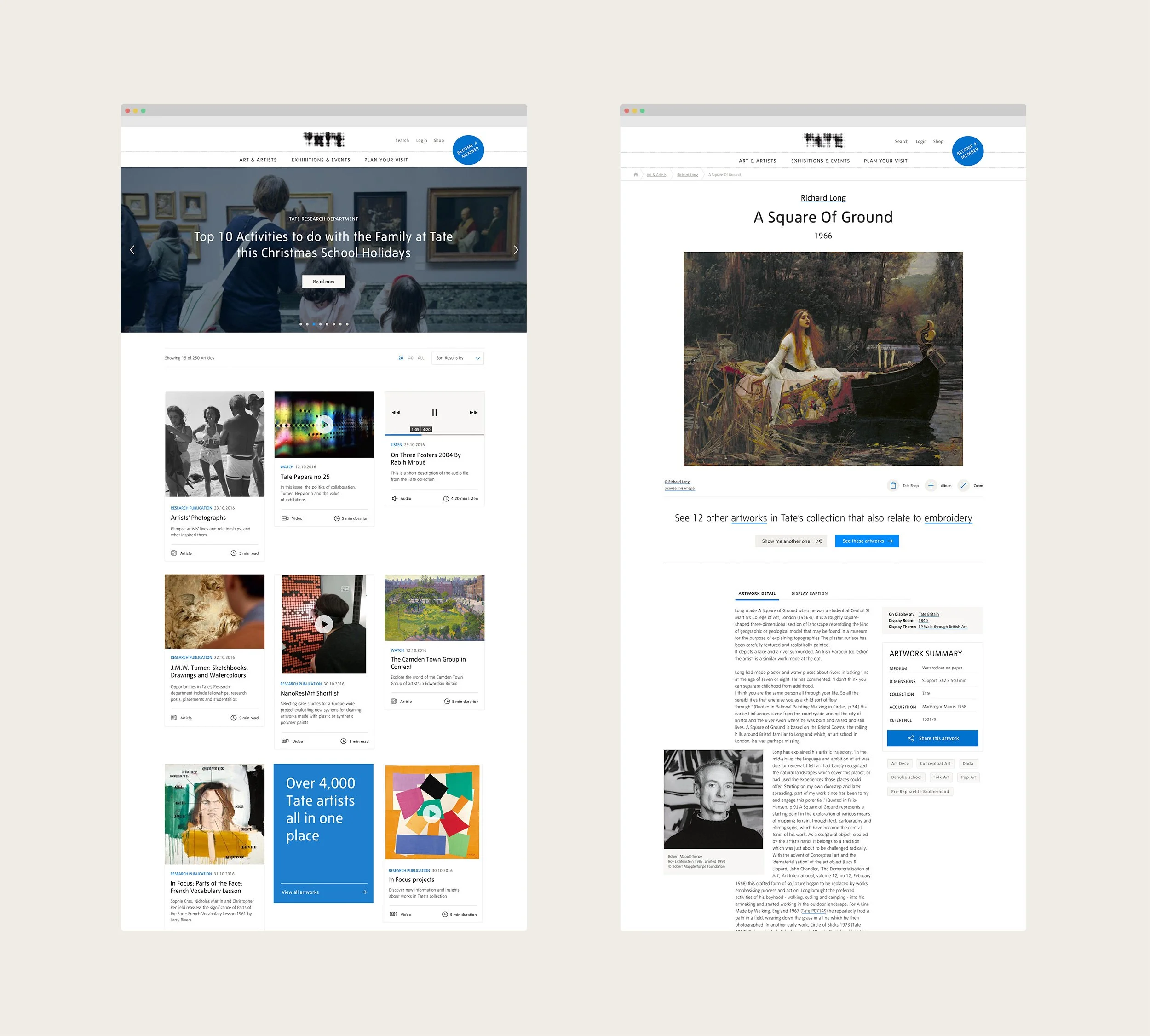
We began with the highest-traffic areas of the site: artist and artwork listing pages.
The challenge was to make a vast and complex archive easier to navigate without oversimplifying the depth of content. This required refining filtering, hierarchy and metadata presentation — ensuring users could move confidently between artists, artworks and related content.
The work balanced editorial integrity with usability at scale.
Aligning stakeholders through workshop design
Alongside core page redesigns, I was tasked with leading the concept and UX direction for a new digital discovery tool.
With many knowledgeable stakeholders across curatorial, digital and content teams, alignment was essential.
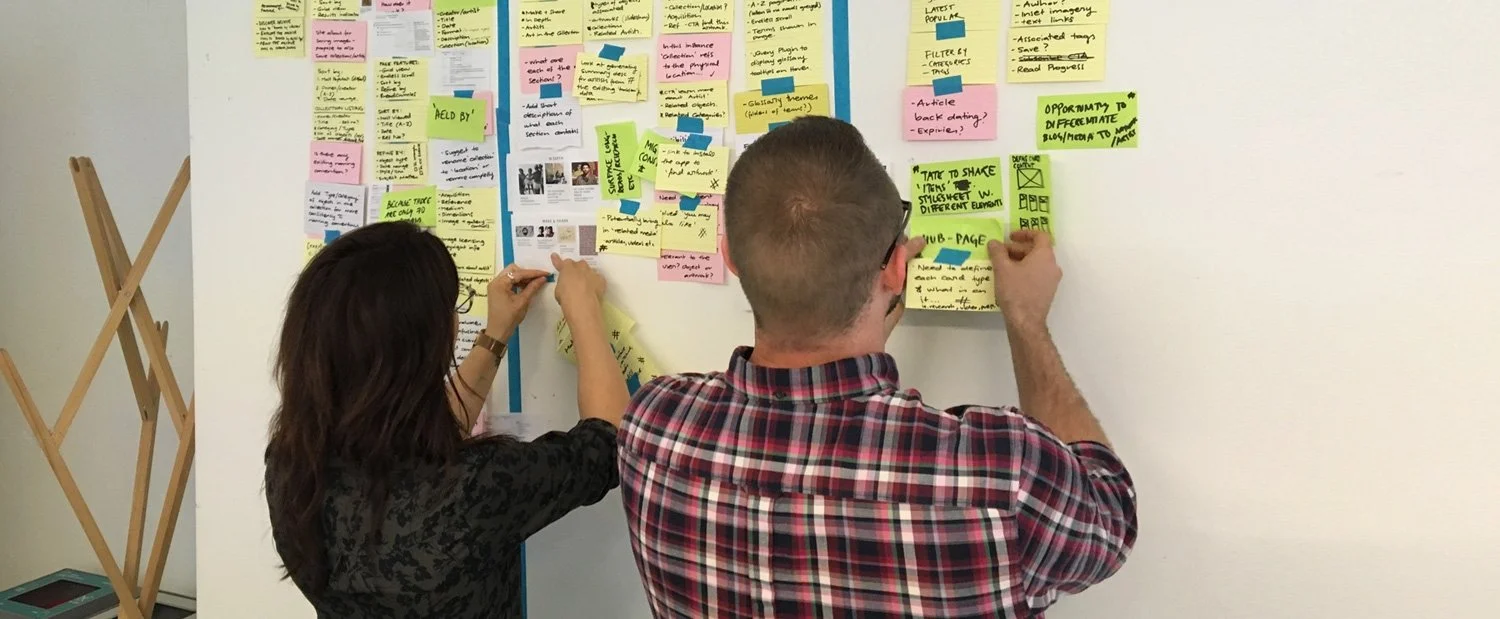
I planned and facilitated a full-day discovery workshop, introducing structured ideation techniques including rapid sketching, collaborative critique and group prioritisation. The aim was to surface ideas quickly, evaluate them objectively and build shared ownership around a clear direction.
From over 20 initial concepts, we converged on a single approach with broad internal support.
The Discover tool
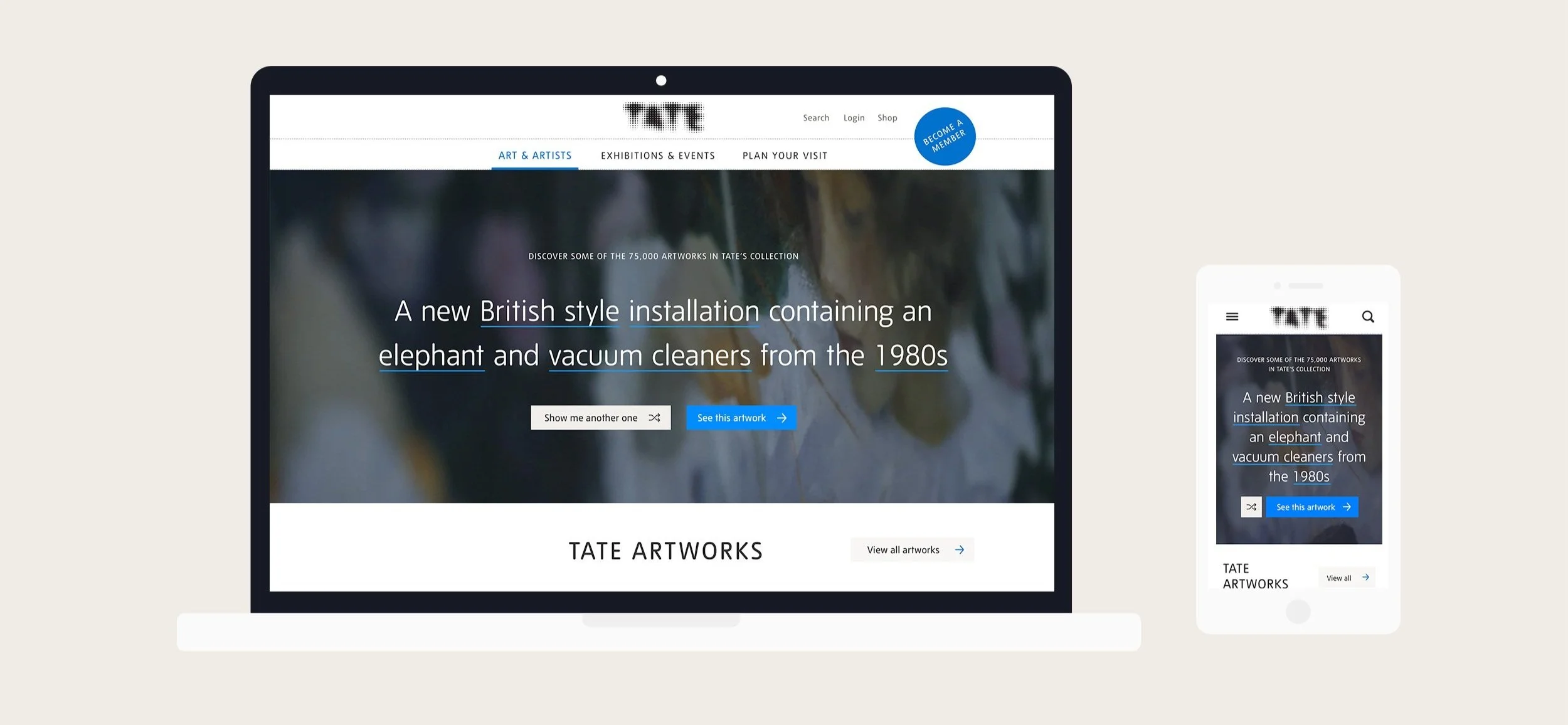
The resulting concept was a natural-language discovery interface.
Instead of relying solely on filters and search inputs, the tool generated curated sentences combining artist, subject and contextual metadata. Users could:
Click highlighted keywords to explore themed listing pages
Navigate directly to a featured artwork
Shuffle to generate new combinations
The interaction model encouraged exploration, inviting users to encounter the collection in unexpected ways while remaining grounded in structured metadata.
The Outcome
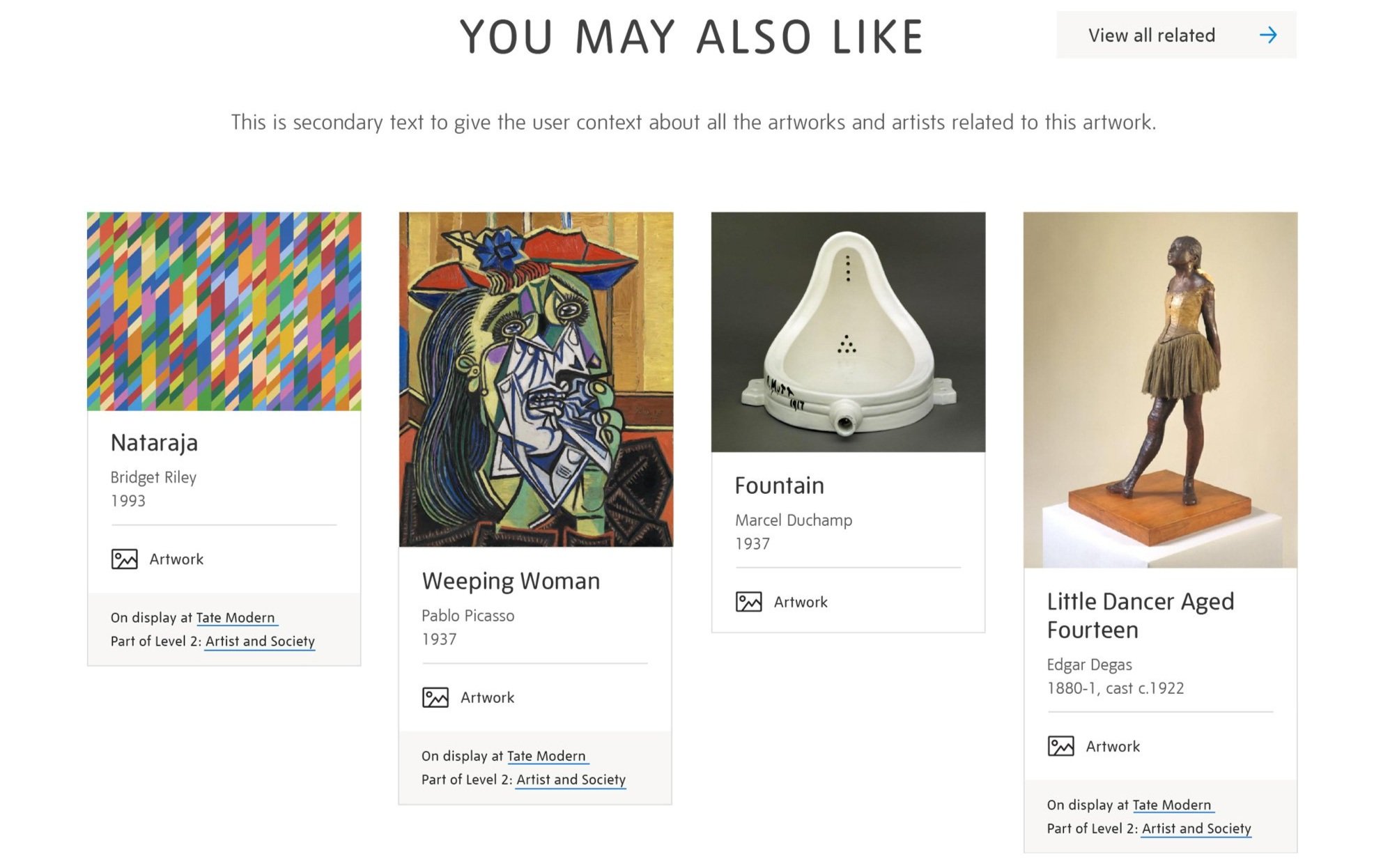
The redesigned listing pages and discovery tool improved navigation across Tate’s extensive archive, providing a more intuitive path into the collection while respecting the depth and complexity of the content.
The project strengthened alignment between digital, editorial and curatorial teams, demonstrating how structured UX thinking can enhance cultural discovery at scale.